
“You’re at the same table—but everyone’s somewhere else.”
A special message from First Partner Jennifer Siebel Newsom and a Q&A with Lookupp co-founder Samin Bhan on being together at the table
Kids today are growing up in a very different media environment. It’s not just screen time. It’s the messages about bodies, food, and worth that show up every day.
That’s why we created the Nourishing Mind & Body Family Guide as part of our Tech/Life Balance work at the California Partners Project. It’s a free, evidence-based resource to help parents and caregivers talk with kids about what they’re seeing online and how it makes them feel.
— First Partner Jennifer Siebel Newsom
What happens when you put down your phone and look up?
For Samin Bhan, a sophomore at Stanford University, that question sparked the creation of Lookupp, an app designed to help people be more present with the people they care about. Built around a simple idea, Lookupp rewards face-to-face interaction through a community-powered system—small incentives, like a shared dessert, tickets to events, or even charitable donations—when everyone agrees to lock their screens and connect offline.
In this conversation, part of the release of our new Tech/Life Balance Guide, “Nourishing Mind & Body,” Samin shares what he’s learned from watching people use Lookupp—and how families can begin to reset their default away from screens and toward presence, especially around the family table.
Carolyn Gan: What first inspired the idea for Lookupp?
Samin Bhan: It wasn’t just one single moment. It was a cascading sequence of events. Seeing so many moments where people were glued, heads down, to their phones. There was a period of time where I’d broken my phone. That allowed me to look up a little bit easier. I saw those moments one after another, and that made me realize maybe it doesn’t have to be this way.
One of the tipping moments was at this local restaurant with my friends. We go every Sunday. Pre-phones, when I was in middle school, Sunday morning was the highlight of my week. And post-phones, it didn’t feel the same anymore. That was my tipping point.
CG: Lookupp encourages people to put down their devices and connect in real life. What kinds of stories or feedback have you heard from users about how that’s impacted them?
SB: From teachers, I’ve heard really positive things about having attention and presence back from students they were struggling to connect with before. From friends and families, I’ve heard excitement and stories of people saying ‘we went out to dinner with my family, I just gained 50 points, and now I’m about to go get this ice cream gift card.’ I’ve heard a lot of excitement from kids and adults working towards that together. Seeing data of it being used in different settings and expanding to different people has been super motivating. The best feedback is when people say, ‘I loved using it, and now I’m using it with my siblings,’ or ‘now I’m using it with my parents, or my best friend.’
CG: You’re a sophomore at Stanford, and you’re surrounded by people who’ve grown up with technology. What have you’ve noticed about phone use during mealtime on campus?
SB: I’m pretty cognizant of it. If I’m in the dining hall at a table, I try to fully eat while I eat. But I’ve noticed it’s super common to be sitting alone, with a group of people at the dining table, but you’re all with headphones in doing something. Sometimes people are doing work, and I understand that, but I do think if you can’t make 30 minutes to eat per day, three times a day, you’re doing something wrong with your time.
CG: One of the things that I really like about Lookupp is that it helps to reset that default to screens. Our new Nourishing Mind and Body Guide encourages families to think about mealtime as a time to connect meaningfully. What advice do you have for parents who are finding it difficult to get their kids to unplug during meals?
SB: One thing is to lead by example. It’s super important that you’re cognizant of your own usage. Phubbing has been growing for the past few years, where you’re with someone, and even if it’s just for a few seconds, you’ll check a text, or look at your phone. Research shows that it signals to the other person that you’re not as interested in the conversation, and that can be detrimental to the feeling of connection. So, try to lead by example and really be cognizant of that.
And the second thing is, if you’re going with a reward system, try to make it a shared reward that you are working towards together. That can look different for different families.
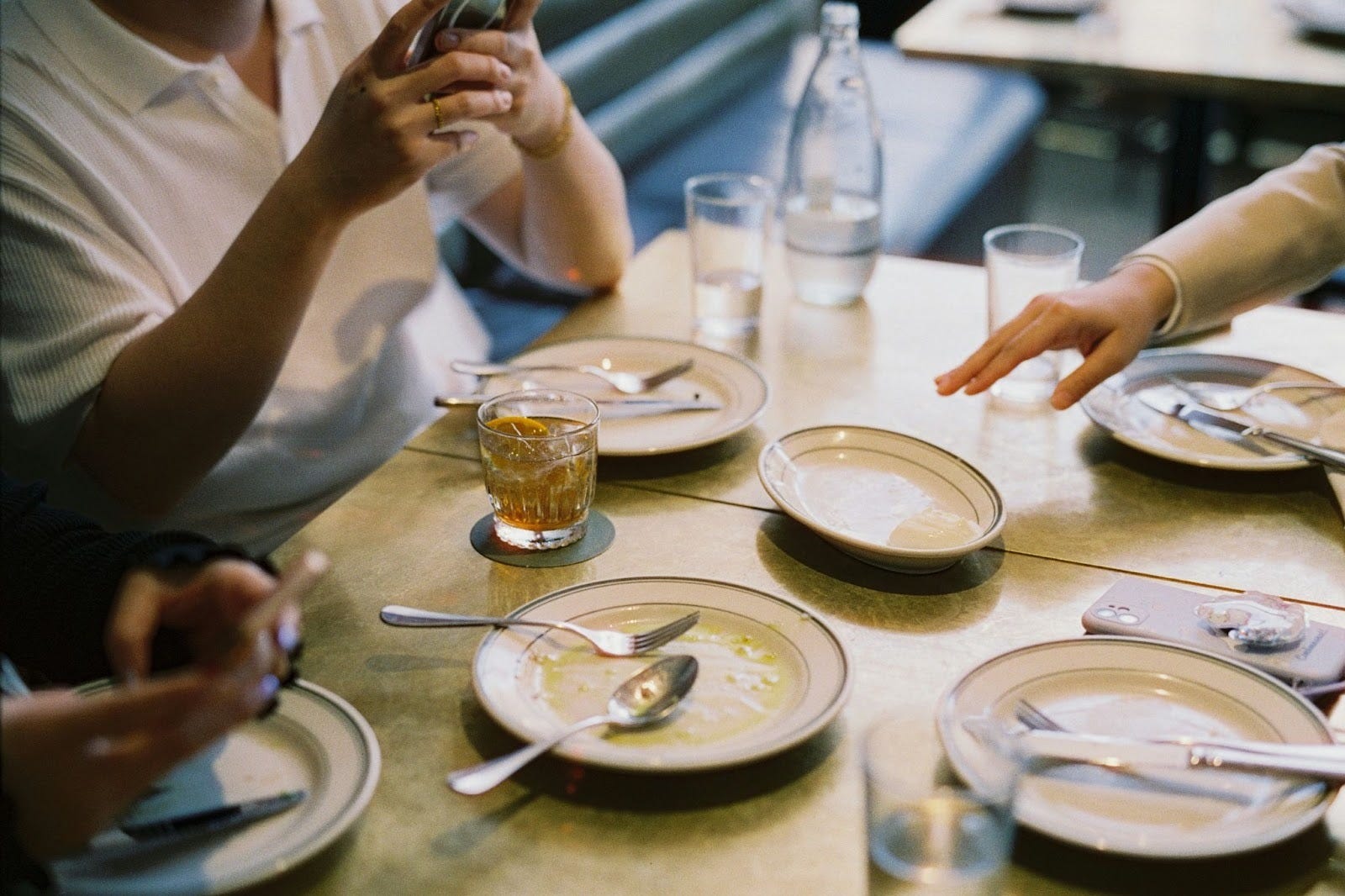
CG: I’m not excusing phubbing, but one thing that I’ve noticed is that after spending a lot of time on a screen, it can be a little hard to shift back into those real-world connections. When that happens to you, what do you do to reset?
SB: I try to manage my time so that when I do have those long extended periods [on a screen], I work in an activity with people, like pickleball or the gym or something that gives us all the ability to focus our attention on something. That can ease the transition. After a long day of work, when you’re busy and mentally fatigued, do something with someone else. And obviously, that’ll facilitate communication and conversation that’s meaningful.
CG: And maybe also movement, right? When you’ve been in your head for so long, it can help to move your body.
SB: Exactly. I mean, you guys just did your Movement & Outdoor Activity Guide. That’s huge. Having that every day is super important, and it’s a good way to change your default from work all day to something else.
CG: I was talking to someone the other day who carries conversation cards in her pocket to help her start conversations. I’m wondering if you have any favorite tips or strategies that help you connect with people face-to-face.
SB: Sometimes I use the classic ‘Rose, Bud, Thorn.’ It’s a good go-to, and it allows the person to reflect. It’s always a good way to get the conversation started, as long as you both do it genuinely.
CG: We actually have ‘Rose, Bud, Thorn’ in the Nourishing Mind & Body Guide. It works for all ages. I even do that with my husband!
I know that you just went home for winter break. Do you or your family have any mealtime traditions that help you to stay connected when you’re around the table?
SB: Most of the time my grandparents are there, which will always be fun, because they will start a conversation or tell a story. That lets everyone relax a little bit, and we can just play along with whatever they’re talking about.
CG: That’s a great way to connect as a family, to hear those family stories. Dinner can be a time for that, and when one person’s telling that long story about their childhood, it gives the rest of us a chance to eat. That’s great. Thank you, Samin.
SB: Thank you!
Your Turn!
Family meals—even if only two people are home—are linked to better mental health, healthier eating habits, and lower rates of disordered eating. Inspired by Lookupp co-founder Samin Bhan’s reflections on presence and connection, here are a few ways to bring those ideas to your own family table.
Lead by example and turn off devices.
Avoid phubbing during family meals to preserve connection.
If you’re using an incentive to encourage device-free meals, choose one the whole family works toward together—like a special activity on the weekend if everyone sticks to keeping phones off the table during the week.
Use conversation games like “Rose, Thorn, Bud” to get kids talking about one good thing from the day (rose), one challenge (thorn), and one thing they’re looking forward to (bud).
Make meals a time to share family stories, especially when grandparents are there.
If you’d like more ideas like this, follow along on Instagram as we share one simple tip each day for our #TogetherAtTheTable challenge. We’re inviting you to commit to a week of phone-free meals and experiment with new ways to connect with family and friends IRL. This is all part of the release of Nourishing Mind & Body, the newest guide in First Partner Jennifer Siebel Newsom’s Tech/Life Balance series.
Join the conversation in the comments: how do you create meaningful connection with peers, friends, or family during mealtime?
Really appreciate the 'phubbing' framing here. The idea that even a few seconds checking your phone sends a signal about interest level is something most people dunno they're communicating. What gets me is the tension between using tech to fix tech problems tho. Lookupp as an app trying to reduce screen dependence feels like a paradox, but maybe thats where we are right now, needing scaffolding to rebuild basic social behaviors.