
“We are not cooked.”
Lessons from the Young Futures Block Party on youth, AI, and the power of joy
If you’ve ever wondered whether AI will help or hurt your child, worried about screen time while recognizing that technology can spark creativity, you’re not alone.
Those tensions were at the center of the Young Futures Block Party in Austin, where youth leaders, researchers, educators, and advocates gathered to discuss what it actually means to help kids thrive in a digital world.
I came home feeling hopeful because the conversation is finally moving beyond fear and toward something more joyful: building a healthier digital future with young people, not just for them.
This journey really began in 2025, when the California Partners Project won the Young Futures Under Pressure Challenge to alleviate the pressures young people face in today’s tech-driven world.
Winning the challenge came with more than funding: it brought the California Partners Project into the YC Community–a national network of leaders scaling bold solutions for youth and families.
As Executive Director, I had the privilege of joining the Young Futures Academy, a five-month leadership accelerator focused on skills enrichment, mentorship, partnership, and true community-building among peers working to alleviate pressures on young people.
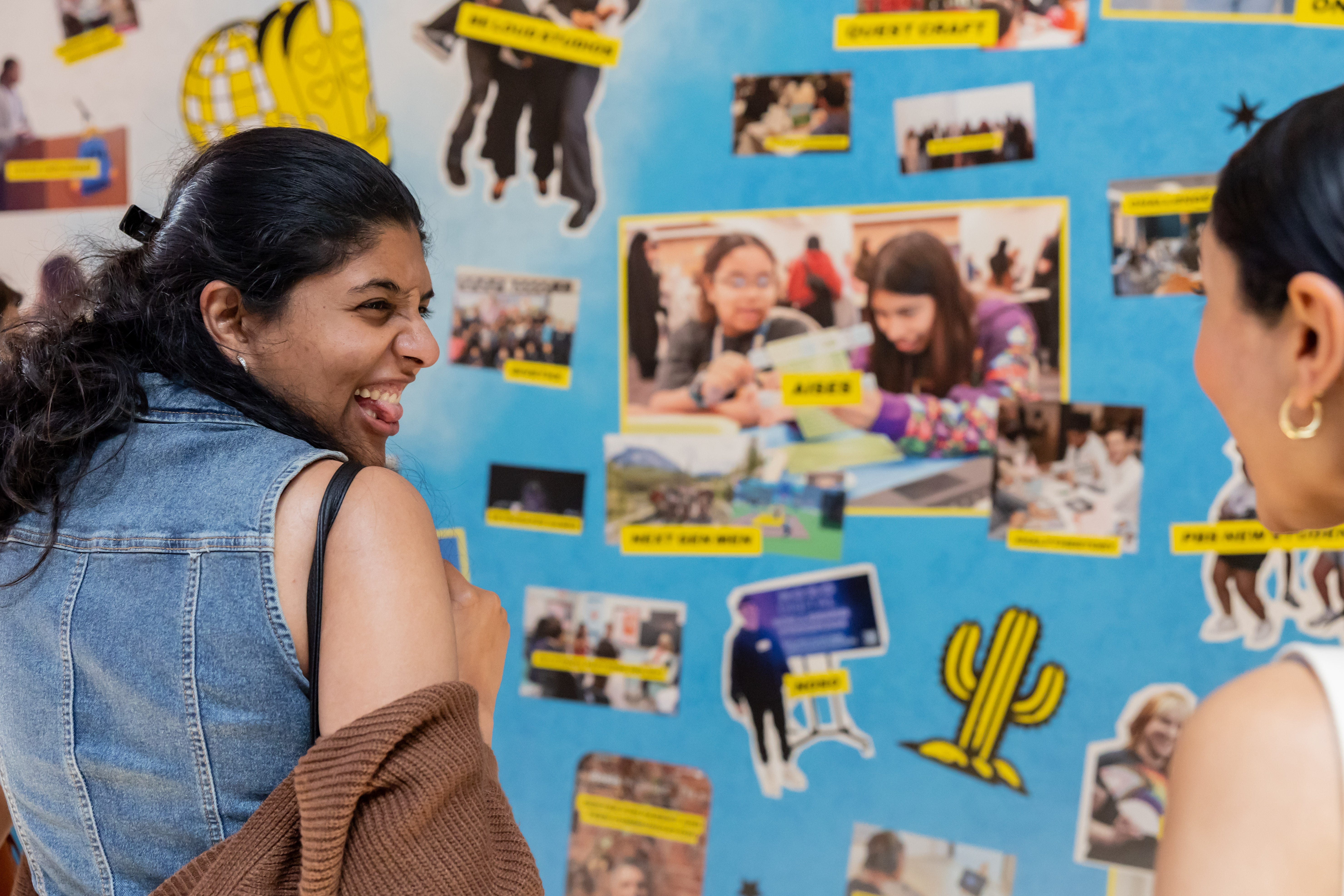
That spirit carried into this year’s Block Party, the first-ever gathering of Young Futures Innovators. Young Futures takes partnership seriously, and its community really shows up. 200 youth leaders and adult advocates converged in Austin, Texas for a chance to connect, learn, and explore.
Here are some of the ideas that stayed with me most:
Youth are conflicted about AI
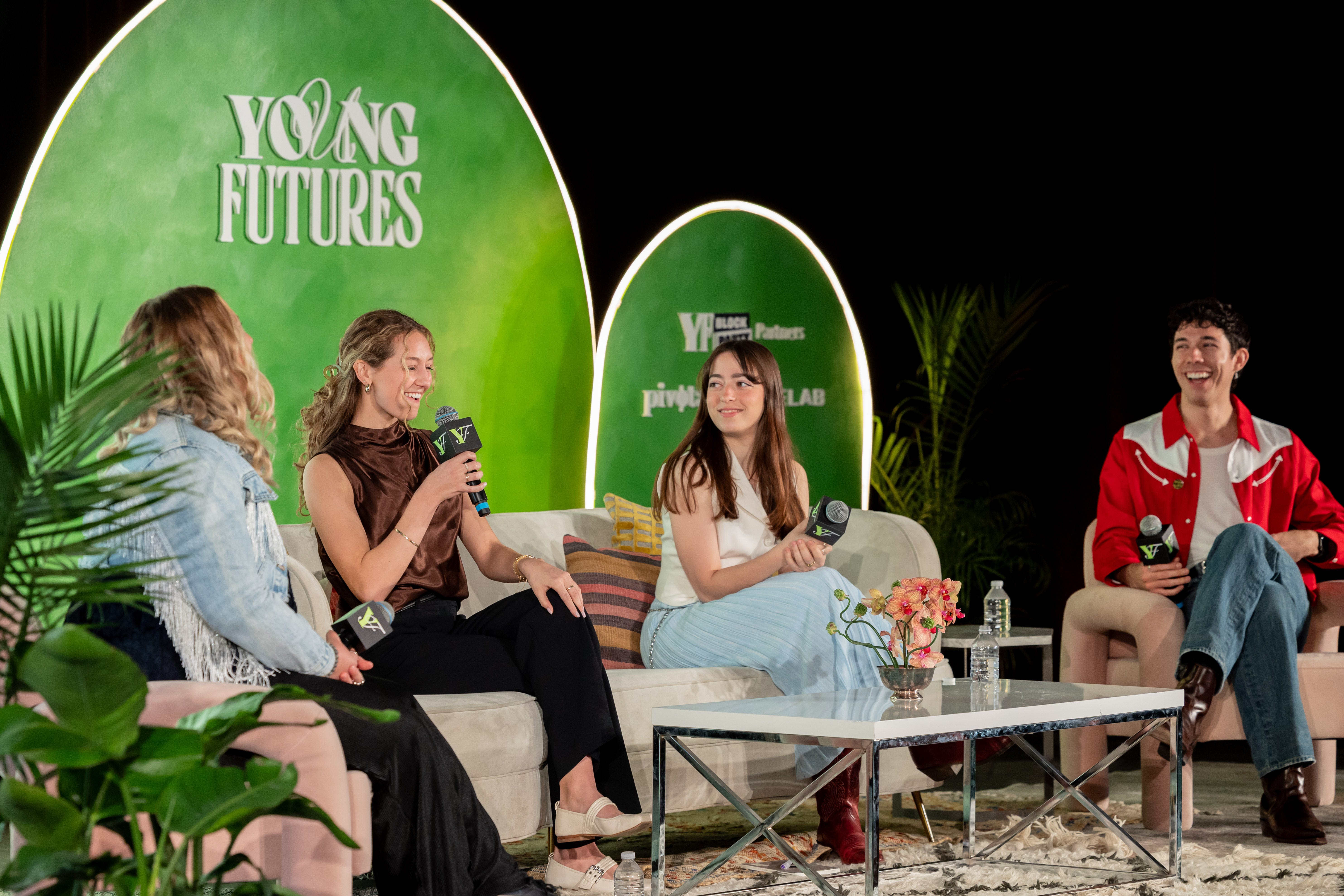
Young people expressed feeling shame and a sense of inevitability when it comes to AI. Dr. Emily Weinstein described how AI adoption has created an “expectation explosion” that teens are sensing acutely. For some, there’s déjà vu from the early days of social media. Maddie Freeman from NoSo Connection Collective pointed to the need for stronger digital literacy to help restore young people’s agency in deciding when and how to use these tools.
Technology can be awesome
As Fourddo co-founder Dylan Keith Humphrey put it: “Devices are more than just harm.” That sentiment came up repeatedly throughout the event. Phones can be a distraction; they can also be a dictionary, map, camera, and creative studios in our pockets. #HalfTheStory founder Larissa May shared a story about a 10-year-old she met who designs multiple apps a week using AI. At the same time, speakers emphasized that digital tools should enhance real life, not replace it. Dr. Lisa Damour offered one of the most memorable reminders of the week:
“Don’t let AI reduce friction. Learning happens in the grappling.”
—Dr. Lisa Damour
Tech companies are outnumbered
Almost every person I talked to reinforced that technology companies must listen to youth when it comes to defining what being well online means to them. “We can support them to find solutions. That is our job,” Charlotte Dungan of the Mark Cuban Foundation encouraged the adult allies in the room. And we have strength in numbers, AI ethicist Neha Shukla reminded us: young people outnumber tech companies by a wide margin.
Community > audience
While much of the conversation focused on AI, social media remained a central topic. NextGenMen’s Jake Stika offered a helpful framework: “Platforms are built for reaction, not relationship.” He added: “The only way we heal is through relationships.” Tech companies may want young people to show up and be engaged on platforms. But as Trisha Prabhu explained, young people want spaces where they can “show up and BE.”
Celebrate teens and tweens
Listening to and trusting teens was a through line in every conversation. Dr. Lisa Damour urged the audience to take teens seriously and generously and not allow others to speak badly about them. “Start with their good ideas,” Larissa May encouraged. “Bring a seat for them to every room you are in.” Others highlighted the power of co-mentorship — intergenerational collaboration that benefits both younger and older participants alike.
Innovation is for everyone
Alongside conversation about uplifting youth voices around AI and co-creating solutions with teens, there was a desire to see greater inclusion in innovation. Cheyenne Skye Branscum of AISES shared how she grew up in a community skeptical of the U.S. Census and now sees similar skepticism among the young people she serves when it comes to AI. “There’s a sadness that it isn’t for them,” she reflected. Lauren Buitta of Girl Security echoed a similar concern, explaining that many girls struggle to trust systems because they have repeatedly failed them.
We are making generational progress
Advocates who started sounding the alarm years ago (some even as teenagers) emphasized the progress made over the past decade. Trisha Prabhu of ReThink Citizens said she has seen firsthand how we have moved beyond diagnosing the problem. We’re no longer asking for the absence of harm so much as the presence of good. Even as change can sometimes feel slow, “we are making generational progress,” Jake Stika asserted. In a moment when headlines often default to fear and doom, the YF Block Party felt grounded in possibility and action.
Optimize for joy
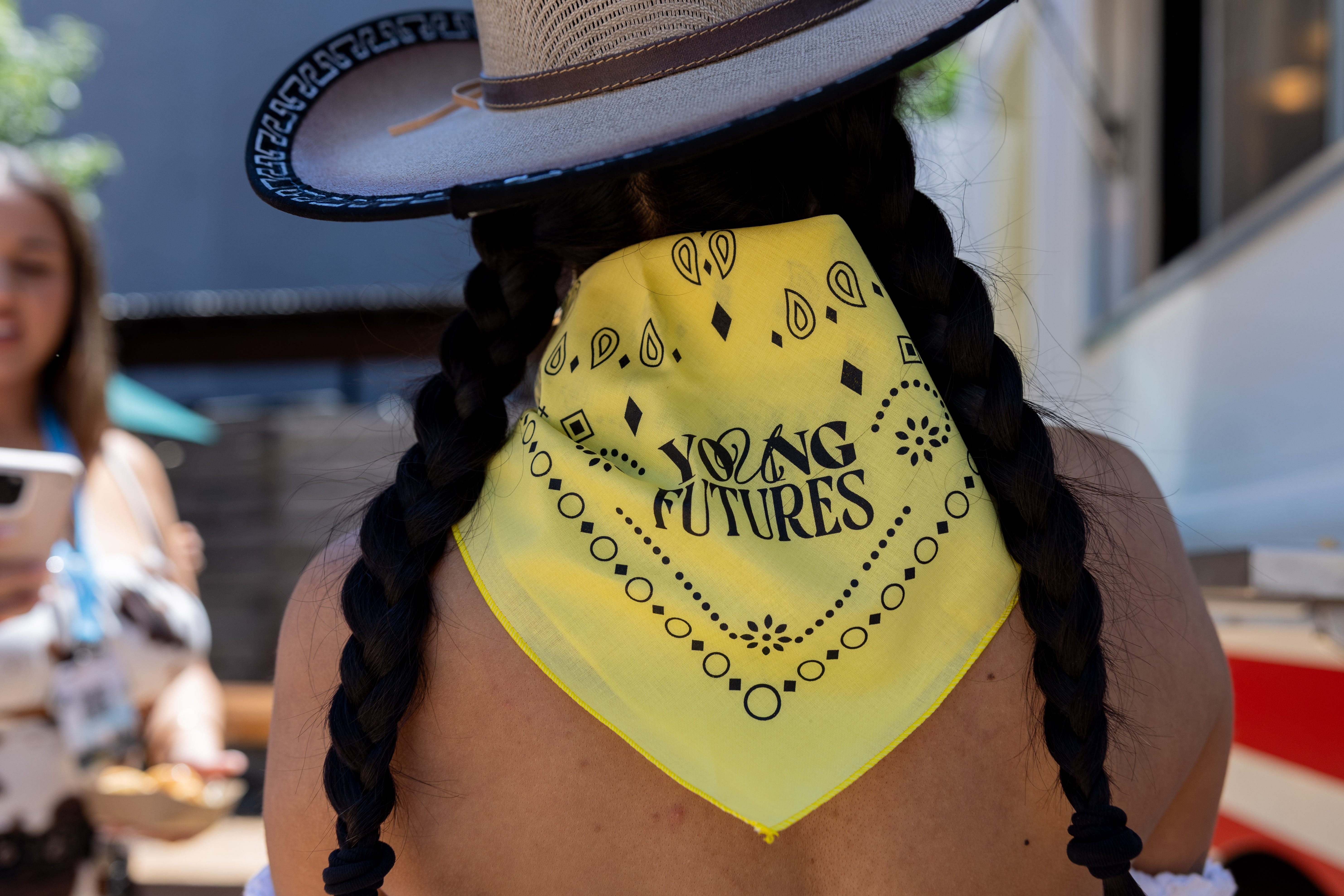
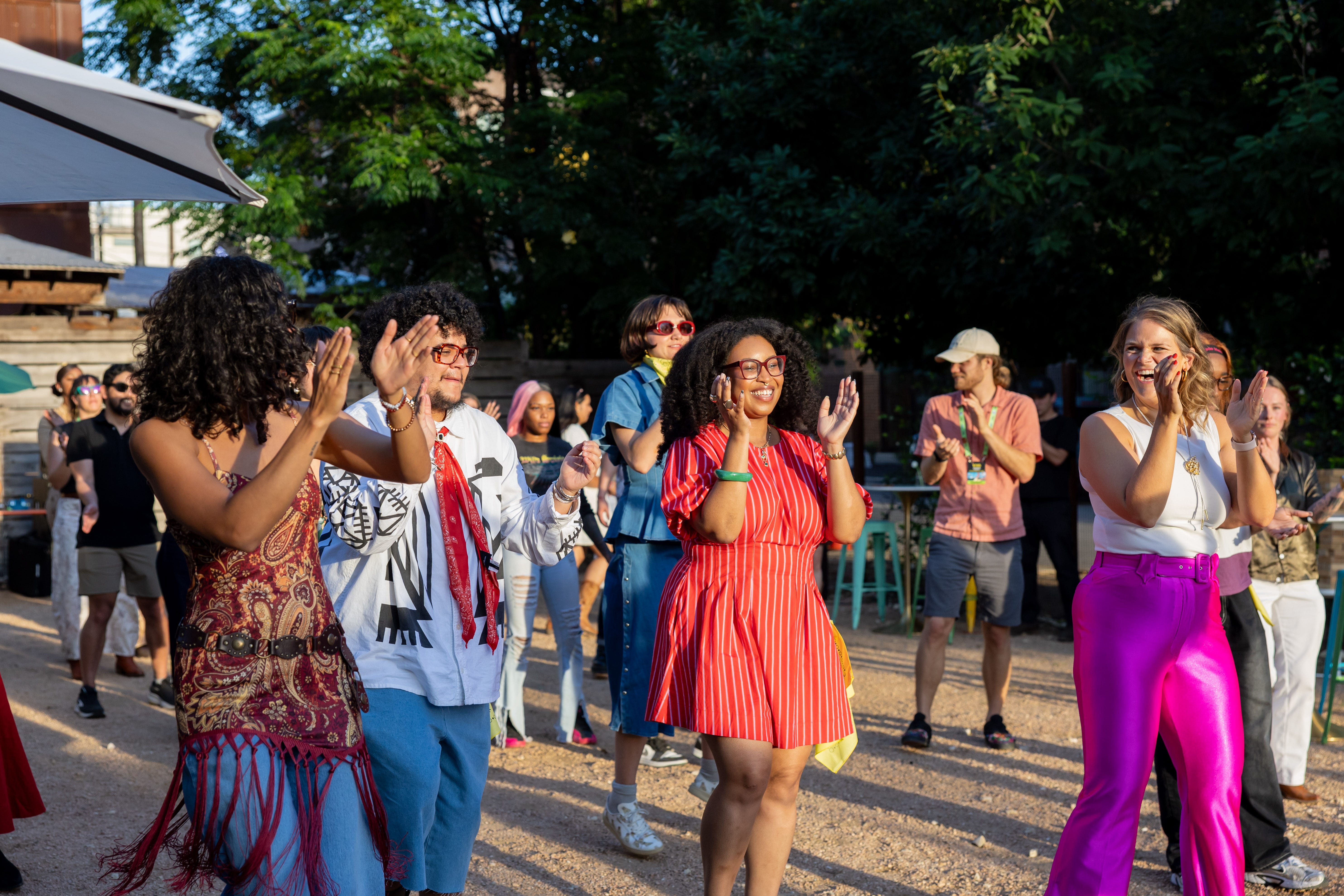
In line for breakfast tacos, throughout the program, and over dinner, the word that was on everyone’s lips was joy. Part of that comes from the spirit of Young Futures itself, exemplified by the busy zine making station and the yellow logoed bandanas poking out of pockets. Larissa May encouraged everyone in the room to optimize for a more joyful digital and physical world because action, after all, is the antithesis of apathy. “Fear wins every headline,” she cautioned. “Fight for joy.”
I’m packing up some great conference swag like a new issue of Voice Male from NextGenMen and a polyhedral d12 dice (IFYKYK) from Quest Craft. But what I’m really taking home with me from this year’s YF Block Party is a deep sense of community and renewed hope that through partnership, we can ensure technology is a force for good in the lives of kids and their families.
And when the going gets tough, I’m going to remember what Hopelab’s Arielle Geismar said:
“We are not cooked. We get to create the future together.”
—Arielle Geismar, Hopelab
—Carolyn Gan, Executive Director, California Partners Project
Interested in reading more youth perspectives on the digital world? Start here:
Tweens’ questions about social media, screentime, and more in their own words
- What Fifth Graders Want to Know About Being Online
A 10th grade boy on fitness influencers
- “There’s a lot of pressure to have this really muscular physique.”
Katia Martha on Gen Z swapping digital habits for IRL hobbies
- “It’s easier to add in good things than take out ‘bad’ ones.”